Choosing an international school on the Costa del Sol: a practical guide
British, IB or bilingual Spanish: how admissions work at Marbella's international schools, what to ask on a visit, and the Junta's separate process for state schools.
Translated from the Spanish original. Leer en español
The school choice is, for many international families, the first decision made when moving to Marbella, sometimes before the housing itself. The area concentrates one of Spain's largest international education offerings, with British, International Baccalaureate (IB) and bilingual curricula. Three names appear on almost every shortlist.
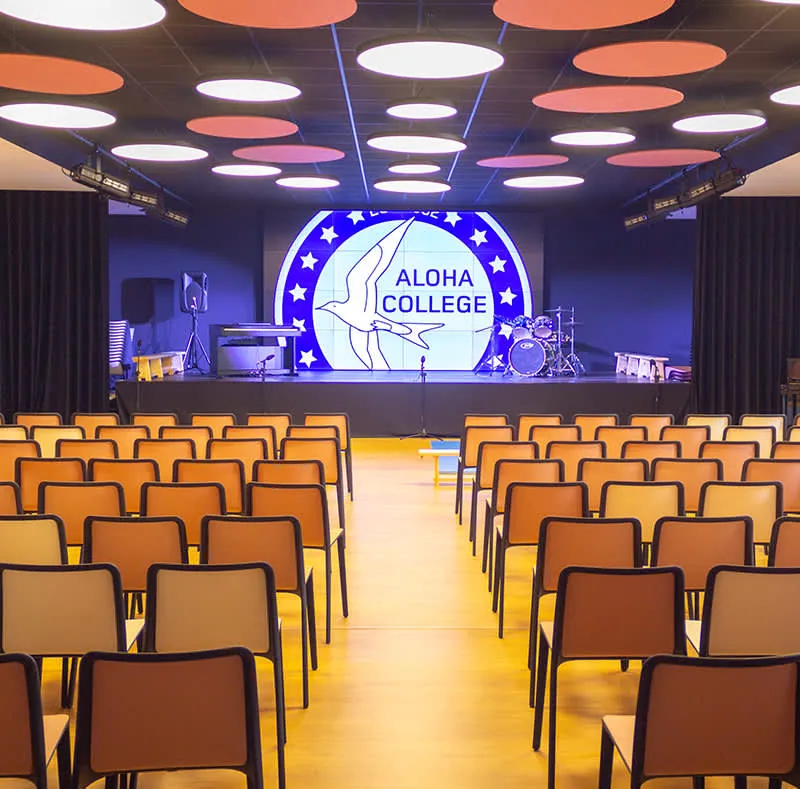
Aloha College, in Nueva Andalucía, is a not-for-profit foundation founded in 1982, with a British curriculum for pupils aged 3 to 18: it offers IGCSE, IB and A-Level and brings together more than 50 nationalities. Swans International School, in Marbella, also educates from 3 to 18, with GCSE and the IB Diploma in sixth form. Laude San Pedro International College, in San Pedro de Alcántara, lets families choose between the British or the Spanish curriculum, has more than 50 nationalities and belongs to the International Schools Partnership network.
How admissions work
Private international schools admit directly, outside the Junta de Andalucía's process: you contact the admissions department, visit the school and submit the application. Start a school year ahead, because waiting lists are common in the most sought-after year groups.
On the visit, ask about class sizes, results in the qualifications the school offers, Spanish-language support for non-speakers, extracurricular activities and school transport. For families moving between countries, curriculum continuity (British or IB) usually weighs as much as location. And in Marbella, the school and the home are decided together, because traffic on the A-7 and the N-340 shapes the mornings.
In practice, visit the shortlisted schools with your child, ask about special educational needs support, and compare school calendars, which at international schools usually run from September to June. And an administrative reminder: registering on the padrón in Marbella eases many school procedures, including at private schools.
The state and concerted route
State and concerted (semi-private) schools follow a separate process, the Junta de Andalucía's escolarización, managed through its schooling portal, with online applications via the Clave iANDE, a digital certificate or Cl@ve. Each year has an application window: for the 2026/27 school year it ran 1 to 31 March. It is a different route from the private international schools, with its own admission criteria and calendar.